
Case Study 03
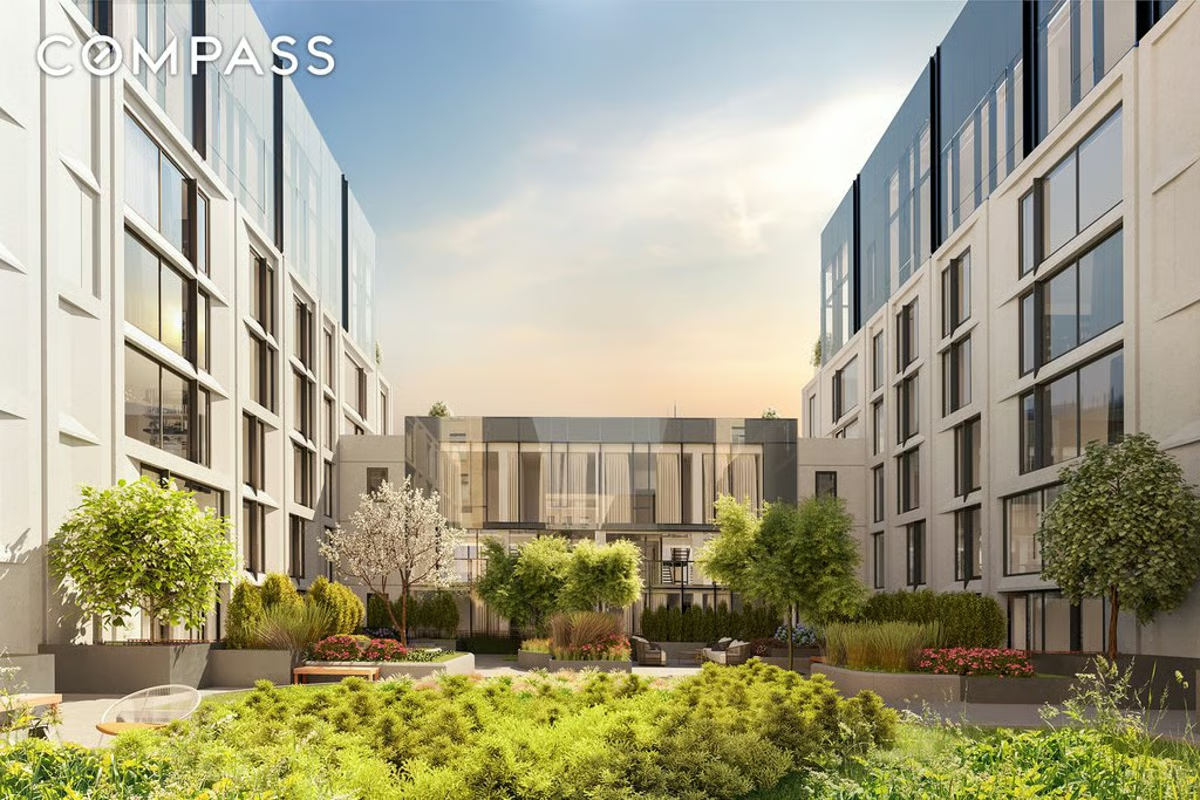
Bloom on 45th
Turning Stigma into Strategy
Overview
A building defined by its failure. A foreclosure splashed across headlines. Fire-sale prices permanently cached in online databases. And an inventory of nearly identical units left behind by a desperate previous sales team. Hope Street didn't run from the narrative — we rewrote it, transforming a lender's liability into a story of opportunity and urgency.
Location
500 West 45th Street, Hell's Kitchen
Type
Luxury Condominium Relaunch
Developer
Lender-Acquired Asset
Units
52 residences
Pricing
$695K – $2.5M
"The best deals come with a story. We made sure it was a compelling one."
The Challenge
What we faced
Public Failure
The foreclosure was a media event. Potential buyers had watched the building's financial collapse in real time, and the stigma of purchasing in a 'failed' project ran deep.
Toxic Brand Equity
The building's name had become shorthand for distressed real estate. Rebranding would consume budget and time the lender didn't have; ignoring the narrative was equally impossible.
Homogeneous Inventory
The previous team's desperate sales strategy stripped the remaining inventory of differentiation. What was left were repetitive floor plans with little to distinguish one unit from another.
Ghost Pricing
Former fire-sale asking prices lived permanently online — impossible to erase and dramatically below current market values. Every buyer arrived armed with outdated comps.


The Approach
How we solved it
Embrace the Narrative
We made a counterintuitive decision: keep the name, own the story. Rather than hiding from the foreclosure history, we positioned it as the buyer's advantage — limited-time pricing before market normalization. Urgency replaced stigma.
Curated Scarcity
From the homogeneous inventory, we hand-selected a strategic subset of units representing different exposures, floors, and configurations. The effect: perceived scarcity in a building the press had declared oversupplied.
Two-Phase Pricing Architecture
Phase one captured momentum at accessible price points. Phase two — triggered once financing thresholds were met — recovered maximum value for the lender. Each phase reinforced the urgency narrative.
Results
52
Units Absorbed
2
Phase Strategy
Exceeded
Lender Recovery Target
Conclusion
Bloom on 45th demonstrated that narrative control is the most undervalued tool in new development sales. By converting a building's greatest liability — its public story — into its most compelling sales argument, Hope Street delivered results that surpassed even the lender's recovery projections.